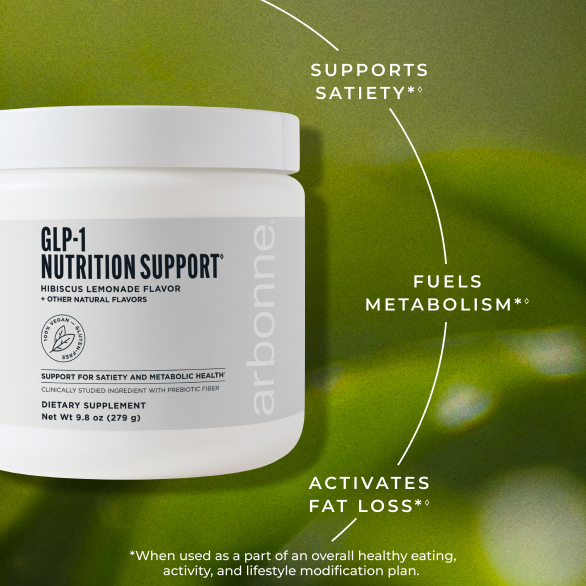
This plant-powered supplement was created to manage some of the unwanted effects of GLP-1 therapy, providing you with a holistic approach to support your well-being*
During GLP-1associated weight loss, lean-mass changes are typically adaptive and preventable , not degenerative. GLP-1 Body Composition Changes: What Clinical Trials Show About Muscle Loss Clinical trials and body-composition sub-studies of semaglutide and tirzepatide consistently demonstrate: Fat mass accounts for most weight lost during treatment. Lean mass may decrease , particularly without resistance training or adequate protein intake. In many patients, the proportion of lean mass relative to total body weight is preserved or improved , because fat loss exceeds lean loss. Key clinical insight: GLP-1/GIP therapies improve overall body composition by preferentially reducing fat massnot by causing muscle breakdown. Lean mass refers to all the non-fat tissues in the bodyprimarily skeletal muscle , but also organs, bones, connective tissue, and body waterthat support metabolism, movement, and overall physical function
It should be noted that, while the tolerability and efficacy profile of the GLP-1R agonist/GIPR antagonizing antibody maridebart cafraglutide warrants enthusiasm, it has not yet been directly compared to GLP-1R agonism or dual GLP-1R/GIPR agonism in the clinical setting
By activating GLP-1 receptors in multiple locations throughout the body, these drugs slow gastric emptying (the rate at which food leaves the stomach), enhance feelings of satiety, and reduce appetite
Evening injections shift those peaks to overnight, which some people prefer because they sleep through the worst of it
The Science Behind Peptide Purity Testing